
London Weekend
Four days across London
A four-day proof of concept presented as one continuous cinematic Trip Story. The Journey companion follows the reader day by day and keeps every Place within easy reach.
Begin Day 1Four days, sixteen places
The overview gives the full four-day journey some geography before the story begins. Once you are reading, Journey stays focused on the current day and lets you move continuously through every Place.
Tower Bridge
The starting point
Starting on the river
The idea here is that the photograph remains the atmosphere of the place while the story moves over it. A place can contain one paragraph or twenty; the structure does not change.
The story should feel authored, even when the page itself is assembled automatically from structured data.
On a real trip this could be a memory, a practical note, a thought at the time, or simply enough context to connect one photograph to the next.
Borough Market
Food, crowds and colour
A completely different pace
The background changes with the place, but the reading direction stays conventional: just keep scrolling down. Supporting photographs can interrupt the text whenever they earn their place.

There is no fixed “caption then gallery” template. This paragraph could be followed by one photo, six photos, another paragraph, a quote, or nothing at all.
A few moments from the market


Bankside
Back beside the Thames
Let the photograph breathe
Not every part of the journey needs to be busy. A strong photograph can occupy most of the viewport, with a much smaller amount of writing floating over it.

A journey is partly the places themselves — and partly what happens between them.

St Paul's
Across the bridge
Finishing by the dome
The first day can finish cleanly here without ending the whole trip. The built-in “Next: Day 2” transition is enough unless the author has chosen to add an optional Day introduction.
If the author later chooses separate-day pages instead, the underlying places and blocks do not change — only the presentation rule does.

Westminster
A new day by the river
Day two begins again at the Thames
A new day should feel distinct without forcing the reader to learn a new interaction. The background changes, the day label changes, but down still means forward.
Days organise the journey. Places tell the story.

Trafalgar Square
Open space and London noise
The city opens out
With eight places rather than four, the top Journey control matters more. The story itself stays uncluttered while the day and map structure lives one tap away.

Covent Garden
Markets, performers and lunch
More content, same rhythm
A longer trip does not need a more complicated story layout. It needs better navigation around the edges — which is why the Journey panel now works day by day.
The orange accent is also deliberately tiny: a line, a marker, an active state. It gives the journey an identity without colouring the photography.
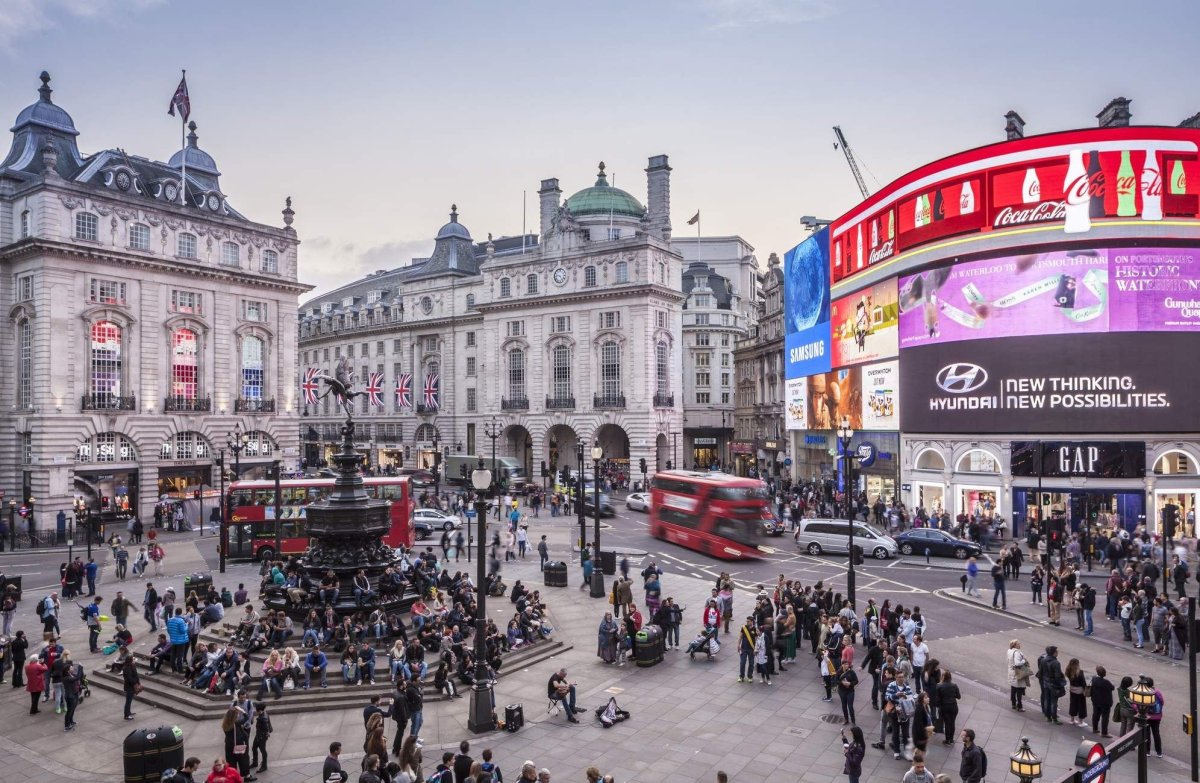
Piccadilly Circus
A brighter final stop
End the trip, not just the day
Only the final place gets the full journey ending. A real multi-day trip could continue for three days or thirty; the reader still experiences one clear place at a time.
The interface grows with the trip. The story itself should not have to.

Greenwich
A new day, the same journey
Day three should not feel like starting over
Day three continues in the same uninterrupted story. The visual language and Journey navigation stay continuous while later media loads progressively as the reader approaches it.
A long trip can pause without losing its sense of place.

Cutty Sark
Down by the river again
Still one place at a time
The renderer does not need to become more complex just because the trip is longer. The complexity belongs in navigation around the story, not inside each chapter.

Greenwich Park
A wider view of London
A quiet stretch in the middle
A trip page does not need equal amounts of content for every stop. Some locations may be a single photograph and one line; others may contain a full sequence of memories.

Canary Wharf
Glass, water and a different skyline
Day three closes without closing the page
The lightweight day transition keeps the continuous story moving. A larger Day introduction only appears when the author has something genuinely worth adding.

Tower of London
Back where old London meets the river
The final day begins
Opening Journey here should immediately select Day 4. The continuous Places list still allows the reader to scroll back through every earlier day without introducing a separate whole-trip navigation state.

Leadenhall Market
A covered pause in the City
A different texture again
The same block system can carry a four-day trip without changing its rules. That is exactly what we want before freezing the eventual database contract.

Barbican
Concrete, water and quieter streets
Long trips need orientation, not clutter
The Day selector, continuous Places list and route map should carry the burden of scale. The story remains as simple as it was when there were only four places.

King’s Cross
A natural place to finish
Now the whole journey can end
The true final day gets the full professional ending. From here the reader can return to the beginning, reopen Journey, or eventually move back to the Trip Overview or lifetime Stories, Map or Places level.
Four days. One continuous Trip. Still one story.
London Weekend
Four days and sixteen places, presented as one continuous cinematic Trip Story.
Back to the trip beginning ↑ All stories →Test image credits
The Tower Bridge — LuciaHrdaCreative Commons (see source page)
Tower Bridge MVI 1768 — Deror aviCC BY-SA 4.0
Borough Market — Jeremy KeithCC BY 2.0
Borough Market cake stall — David IliffCC BY-SA 3.0
City of London and River Thames from Bankside — AcabashiCC BY-SA 4.0
Millennium Bridge & St. Pauls — SchlaierPublic domain
St Pauls Cathedral from West — Steve CadmanCC BY-SA 2.0
Westminster Bridge, Parliament House and Big Ben — Wikimedia CommonsSee source page
Trafalgar Square, London — geograph.org.uk / Wikimedia CommonsSee source page
Covent Garden Interior May 2006 crop — Wikimedia CommonsSee source page
Piccadilly Circus test image — CesteePrototype source image
Old Royal Naval College, Greenwich — Wikimedia CommonsSee source page
Cutty Sark June 2012 — Wikimedia CommonsSee source page
View to London from Greenwich Park — Wikimedia CommonsSee source page
Canary Wharf from Greenwich — Wikimedia CommonsSee source page
Tower of London viewed from the River Thames — Wikimedia CommonsSee source page
Leadenhall Market — Wikimedia CommonsSee source page
London - Barbican Estate — Wikimedia CommonsSee source page
King's Cross Station — Wikimedia CommonsSee source page